
FutureSheLeaders (15)
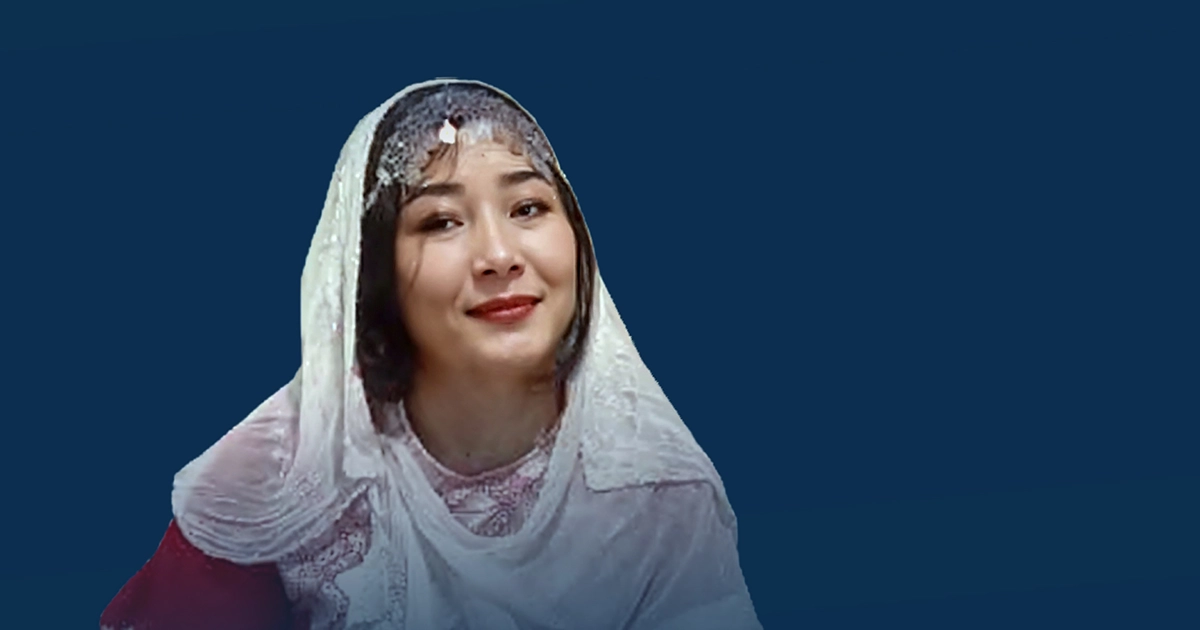
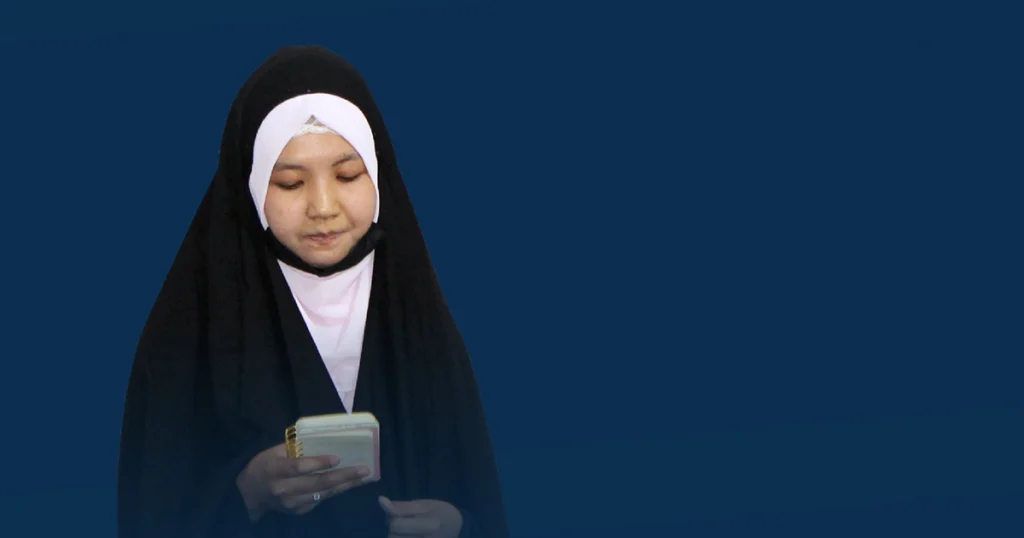
In this inspiring episode of FutureSheLeaders, we hear the powerful story of Hameeda Ahmadi –
a girl who rose from darkness and limitations to create her own path of hope and leadership.
She takes us back to the days when her school was shut down and the doors of education were closed,
to the moments when, through carpet-weaving, tears, and dreams, she began weaving a new future with her own hands.
Hameeda’s story reflects:
- The struggles and challenges she faced as a girl;
- Her determination to continue learning against all odds;
- Her mission to build women’s empowerment groups and teach illiterate mothers;
- Her steps toward female leadership and a society free from violence;
- And her message of hope for every Afghan girl.
This conversation is a story of resilience, courage, and leadership –
the story of a girl who firmly believes:
“We are not weak; we are far stronger than they think.”
Join Hameeda Ahmadi on this journey,
and be inspired by the voice of a girl who fights for freedom, education, and justice.
***
Royesh: Hameeda jan, greetings to you and a very warm welcome to the FutureSheLeaders series.
Hameeda: Hello, Ustad, and greetings to you as well. I hope you’re doing well, healthy, and happy. Thank you so much for inviting me to the FutureSheLeaders program. I truly hope we will have an inspiring and meaningful conversation together.
Royesh: Hameeda Jan, you are the very first guest from your region to join this program. I hope this will be a good beginning, encouraging more girls from your area to join the FutureSheLeaders circle and share their stories. How familiar are you with this series? How much have you followed the episodes?
Hameeda: I’ve been following the program since the very first episode with Tahera Khademi. Since then, I’ve watched the stories of Shahla Jalili, Sahar Sna, Parvin Yawari, and others. I’ve found so much inspiration in their beautiful life stories. That’s why I wanted to be here too – so that, hopefully, others can find inspiration in my story as well.
Royesh: The FutureSheLeaders series tells the stories of young women who, today and in the future, are shaping a new and different model of leadership for society. Hameeda, what new model of leadership does your story represent?
Hameeda: My story, Ustad, also rises from the heart of darkness – from challenges, hardships, courage, and resilience. I hope it resonates with everyone and becomes an inspiring story for all.
Royesh: How are you confident, as a young woman, that you can turn these challenges and hardships into a model of leadership – one that helps others avoid going through the same struggles, or at least makes it easier for them to overcome these challenges when they face them?
Hameeda: Ustad, one of the things that has kept me strong and helped me overcome these challenges is patience, resilience, and faith – faith in myself and in the dream I carry. The most beautiful thing that has kept me standing is this very dream, which gives me strength every day and motivates me to keep moving forward.
Royesh: And what is your dream, Hameeda?
Hameeda: My dream is for being a girl not to be considered a crime anymore. I dream of a future where, when I become a doctor or a lawyer, I can walk freely in the streets and marketplaces. If I become a teacher, I want to be able to teach as a woman – openly, without restrictions, without conditions, and without barriers to my education or my work.
Royesh: Do you think that, right now, being a girl is what limits your freedoms?
Hameeda: Yes, absolutely. I believe that, in our society today, a girl’s thoughts, a girl’s voice, a girl’s education, and even a girl’s right to work are treated as crimes. There are so many restrictions on us. For example, we’re not allowed to attend schools or universities anymore. Every day, new laws are imposed, and even our voices are silenced. When a girl raises her voice for freedom, for justice, for education, or for the right to work, that voice is labeled as ‘awrah’ – something shameful, as if speaking up is a sin.
Royesh: Before you, there was a time when the late Ustad Mazari used the phrase ‘Being Hazara should not be a crime.’ Do you think the pain behind his words is echoed in your own – that the weight of being Hazara back then is similar to the weight you now feel in being a woman?
Hameeda: Yes, Ustad. The pain that Baba Mazari endured back then – the injustice he faced – today, we are living through that same pain and suffering, but in a different form.
Royesh: What do you mean by that?
Hameeda: I mean that we cannot go to school. We don’t have freedom of speech. Our voices are silenced, and we are deprived of nearly every right we should have.
Royesh: Mazari was speaking about the situation of one particular ethnic group – the Hazara community. But you’re talking about women as a whole, as a gender, which goes beyond ethnicity, religion, or language. It includes all Afghan women – Pashtun, Tajik, Uzbek, Hazara, Nuristani, Pashto speakers, Farsi speakers, Shia, Sunni, Hindu… everyone. Do you think your struggle has a broader scope and a wider audience compared to Mazari’s?
Hameeda: Yes, exactly. We don’t see ethnic divisions. For example, we don’t say that only Hazara girls should grow, or only Hazara girls should have access to education, work, and freedom. To us, it doesn’t matter which ethnic group a girl belongs to. Women from every background deserve their basic rights. In our work, there’s no ethnic discrimination, and we stand against gender discrimination as well.
Royesh: Do you think this broader scope of your audience also makes your model of leadership different from Mazari’s model?
Hameeda: Yes, Ustad. Our leadership is different because we reject ethnic divisions. And we also refuse to move forward through war and violence.
Royesh: So, if there are others in your society who choose weapons and violence as their tool, how do you respond to them?
Hameeda: Our weapon is our awareness, our knowledge, and our faith. We believe in a country and a society free from violence.
Royesh: Those who stand against you – those who oppress you, who have turned being a girl into a crime, and who have pushed women to the margins of society – they use war, violence, and suppression. Do you truly believe that with knowledge, awareness, and the feminine compassion you speak about, you can overcome such a powerful and oppressive force? Are you confident your model of leadership can succeed against them?
Hameeda: Yes, Ustad, absolutely. That is exactly where our difference lies – the difference between us and them, and the difference in our model of female leadership. We use our weapons of awareness, kindness, humanity, justice, and equality to stand against them.
Royesh: And how confident are you that this weapon can truly succeed?
Hameeda: I personally believe one hundred percent – I am fully confident that even if we cannot succeed today, we will succeed tomorrow. One day, we will overcome them.
Royesh: And where does this confidence come from?
Hameeda: My confidence comes from my womanhood, from being a girl, and from the unique perspective that female leadership brings. I truly believe in it, and I am convinced that this model of leadership can be successful for everyone.
Royesh: In your personal experiences, when you think about achieving this model of female leadership, what is the biggest challenge or fear you face that sometimes makes you hesitate or feel afraid?
Hameeda: Ustad, the biggest fear I have is simply being a girl in this society. I’m afraid that I may not be able to continue, or that something could happen to me at any moment. Because every single day, I live with fear and uncertainty.
Royesh: Since we’ve been talking about what has made you a hopeful and confident young woman, let’s also explore the background that shaped you – your family, your upbringing, your school, and your community. In what year and where were you born? And what was your family environment like during your childhood? Are there any memories from those early years that you feel had a big influence on your growth?
Hameeda: I was born in 2004 (1383 in the Afghan calendar) in Ghazni province. I have very good memories of my family environment during my childhood. Even though we lived in a traditional and conservative society, my family – from my father to my grandfather and my mother – never created restrictions just because we were girls. They never treated us differently from our brothers. In fact, whatever I wanted, my parents would prepare it for me before even thinking about my brother. I always felt happy and even felt that I was valued more and loved more by my parents.
Royesh: Did this sense of equality between girls and boys also exist in other families in your community? Was your broader environment similar, or did you witness discrimination against girls around you?
Hameeda: It was very different, Ustad. I personally witnessed a lot of gender discrimination in other families – even in some of our close relatives and among the families living around us. For example, if a girl wanted to go to school or make a personal decision about her life, she wasn’t given that right. They would say things like, ‘You’re a girl, and we have our family’s honor to protect. If you go out tomorrow to study somewhere and our honor is questioned, it will bring shame to us.’ In those families, daughters were constantly limited in what they could do.
Royesh: When did you first become familiar with writing, books, and notebooks? Do you remember your very first day at school – when was it, and which school did you attend? What did you feel on that first day?
Hameeda: I was seven years old. I first started school through an organization – I can’t remember its exact name – where classes were held inside mosques. Both I and my cousin were enrolled there together.
Royesh: So, before that, you weren’t familiar with pens, notebooks, writing, and reading at home?
Hameeda: I actually was, because we used to go to the mosque, and when we came home, my father and my uncle would help us with reading and writing. So, even before I officially started school, I was already practicing at home.
Royesh: Are your parents educated?
Hameeda: My father can read and write. He studied up to grade three or four but couldn’t continue afterward – he either had to go to Iran for work or worked as a shepherd. My mother, however, is illiterate; she never had the chance to go to school.
Royesh: Before you, had anyone else in your family ever gone to school or university?
Hameeda: No, no one had. I was the very first person in my family to go to school.
Royesh: What about your extended family – your cousins, uncles, and aunts’ daughters? Was there anyone before you who managed to attend university or find a career in their field?
Hameeda: No, not really. Among my relatives, one of my cousins did finish high school, but she got married right after and couldn’t continue her education or attend university. Another cousin, who is one year older than me, completed high school too and was about to start her first year in the Economics faculty – but then the Taliban came, and she was no longer able to continue.
Royesh: As a girl, during your years of schooling, when did you first become aware of the idea of gender – the feeling that being a girl made you different? When did you realize that society treats you differently, that people perceive you differently, and that even your family’s expectations from you are different because of your gender? When did this experience of being a girl – of being seen as ‘different’ – first emerge for you?
Hameeda: This feeling started when some of our relatives used to say that girls’ education is useless – that there’s no benefit for a girl to study. They would give examples like, ‘Look at that girl you know, from our own family – she studied, and where did it get her?’
Look at that girl you know – she’s from our own family. She studied, but where did it get her? But you keep saying that I’m determined to study and continue my education.
Later, when we were preparing for the university entrance exam – the Kankor – and I wanted to go to Kabul for extra preparation classes, it became even clearer to me. That’s when I started to really feel the pressure – being constantly reminded, ‘You’re just a girl. You won’t achieve anything. You shouldn’t work so hard.’
One of our close relatives – I prefer not to mention their name – would always tell my mother: ‘You do everything yourself, but your daughter doesn’t work. Instead, you send her to school. What girl has ever achieved anything through education? Why do you take on all the responsibilities while letting her go study?’
Royesh: When you faced these kinds of reactions – when some of your relatives came to your house and tried to create obstacles for your education, your growth, and your plans for the future – how did you respond? Did you stay silent, argue with them, get upset, or try to reason with them? What was your reaction?
Hameeda: At first, I stayed silent. I wouldn’t say anything; I would just leave the room and continue going to school. But every time I heard those words, it really broke my heart. I kept asking myself, ‘Why shouldn’t I, as a girl, be able to achieve something through studying and going to school?’
Later, when I gained more confidence, I started encouraging them about education instead of arguing. And now, something beautiful has happened – those very same people who once tried to stop me from studying are my students today. They’re learning from me.
Royesh: What experience do you have from the time the Taliban came? What grade were you in when they took control of the city, and how did you feel when it happened?
Hameeda: I was in 11th grade at the time. Our province fell to the Taliban earlier than Kabul. On that day, we had to go to the city for the biometric registration of our national IDs. It was a government requirement, so we couldn’t postpone it, even though there was heavy fighting everywhere.
My father told us, ‘Get ready, we have to go. Inshallah, nothing will happen.’ We left the house with fear in our hearts, completed the biometric process, and returned home – but the fighting intensified so much that it became impossible to stay there any longer.
My grandfather called us from Kabul and said, ‘The Taliban are taking over everywhere. There’s no safety left. Your lives are in danger. Come to our house in Kabul.’
My father contacted one of his friends, hired his car, and we prepared to leave for Kabul. Before we left, my mother told me and my cousins: ‘Wear long dresses and big scarves so that you look like older women. Don’t look like young girls. Smear some dust or ashes on your faces so you don’t look too pretty – make yourselves look pale and unnoticeable.’
When I heard that, I froze. I thought to myself, ‘What kind of people are the Taliban, that my mother fears them so much she wants us to hide our faces and even smear ashes on ourselves?’ At that time, we were still so young that dressing like this felt unnatural to us.
About half an hour into the journey, the car suddenly stopped. We were all shocked and confused, wondering what had happened. Then we heard the sound of heavy gunfire nearby. The driver told us, ‘We have to stop here for a while. Police vehicles are passing through, and there’s intense shooting.’
In that moment, we all began reciting the Kalima Tayyiba. We truly thought it might be our last breath. I remember crying silently, holding my little brother close. Then I noticed him smiling at me – as if everything would be okay. That tiny smile gave me hope in the middle of chaos. I thought to myself, ‘I wish I were still a child like him, too young to understand what war means, what death means, too young to feel this fear.’
Eventually, we made it to Kabul and felt safe – at least for a few days. It was such a relief not to hear the word ‘Taliban’ anymore, even briefly. But that peace didn’t last long.
On the seventh day of Muharram, my grandfather had arranged a small gathering at home for a religious offering. While we were sitting around the table, we suddenly heard loud noises and people shouting: ‘The Taliban have taken Kabul too!’
At that moment, my heart sank. It felt like the nightmare had followed us. We had escaped Ghazni and sought refuge in Kabul, but the Taliban’s shadow reached us there as well.
Panic spread immediately. Our guests scattered in every direction, everyone desperately trying to find safety and protect their lives.
Royesh: Now, if you look back after four years, do you feel that the fear and panic you experienced back then were fully justified? Or do you think some of it was shaped by uncertainty – a lack of awareness, a lack of understanding of yourself, your abilities, and the nature of events? If you look at it now with a different perspective – with more patience and clarity – do you feel that perhaps it wasn’t as terrifying as it seemed at the time?
Hameeda: The fear we had came from what we’d heard from our elders – the stories they told us about the Taliban from twenty years ago. Those words and memories had a deep impact on us. Until you actually face those situations yourself, until you truly experience them, it’s natural to be afraid and even to panic.
Royesh: And what has changed within you, Hameeda, that makes you feel less afraid now, four years later?
Hameeda: The girl I was four years ago is very different from who I am today. Back then, I was always scared, I gave up easily, and I would lose hope very quickly. But now, I’m more patient, stronger, and braver. I’ve learned to understand my circumstances better, to recognize my reality, and most importantly, I’ve discovered my dream. Finding that dream has given me the courage to follow it, and today my patience and resilience are far greater than they were four years ago.
Royesh: When and how did you first come across the Empowerment lessons?
Hameeda: I was in 11th grade at the time. We had just finished our mid-year exams, but later they promoted us to the next grade based on those results because the situation in the country was worsening. For grade 12, we didn’t attend regular classes either – one day, the school principal just called and asked me to come and take the final exam.
I went, took the exam, and that day became the last day I ever set foot in school. That was it – we had officially graduated, even though we had never really studied grade 12. We were among the last graduating class of high school students in Afghanistan before the schools were shut down for girls.
When I heard that we could no longer attend school, I was devastated. I fell into depression and spent over a month in bed, sick and hopeless. Even the smallest word from someone would upset me, and I would easily lose my temper.
At some point, I decided I couldn’t stay in that state. I looked around and saw that some girls were doing carpet weaving at home. I thought maybe working with my hands could help me escape this dark place. So, I told my mother that I wanted to start weaving carpets and asked her to let my younger brother and sister work alongside me, so we could help support ourselves and contribute to my father’s expenses.
I began weaving carpets – and with every knot, every thread I tied, I silently wove my dreams into the fabric: the dream of schools reopening, the dream of writing again, the dream of reading, and the dream of going to university. I felt as though a small flame of hope was still alive inside me, and I believed that one day, somehow, my dreams would come true.
Then one day, a friend told me about the Empowerment lessons and said, ‘If you want, you should join – they’re truly life-changing.’ So I decided to go.
The very first time I sat in an Empowerment class, it felt like a miracle – like a spark that lit up my entire life. It woke me up from the darkness I was living in. The Hameeda who used to cry all the time, who got angry at the smallest things, who had locked herself in sadness – she started to change.
Even during that time, while I was weaving carpets, I got very sick once. My little brother and sister were with me, helping. I told them not to get tired and asked them to go outside and play, while I finished a few more rows on my own. My mother wasn’t home either.
As I sat weaving, my mind wandered back to my school days. I remembered walking happily with my friends to school, laughing and playing on the way, sitting in classrooms, and enjoying time with my teachers and classmates. The more I thought about it, the heavier my heart became until, suddenly, I screamed out loud and started crying uncontrollably.
The next thing I knew, when I opened my eyes, I was in the hospital. I had no idea how I had gotten there. I saw an IV attached to my hand, and I remember they had put an oxygen mask on me earlier. I was fully conscious in my mind but couldn’t speak – my tongue felt locked, and no words would come out.
I overheard my mother talking to the doctor. The doctor asked her what had happened, and my mother explained that I had been deeply distressed because I could no longer go to school. Then the doctor said something I will never forget – something very hurtful, something I still cannot believe came from another woman.
She told my mother: ‘Just marry her off to the first person who proposes. Once she gets married, she’ll be fine – this is all just drama.’
I couldn’t believe what I was hearing. She thought I was pretending that my pain wasn’t real. And hearing that from a woman, an educated woman, broke my heart even more.
Royesh: Was the doctor a man or a woman?
Hameeda: She was a woman. First, she came into the room and started tapping my forehead hard, saying, ‘Wake up! Wake up!’ When I couldn’t open my eyes or speak, she turned to my mother and said those words.
That day, my heart truly broke. Why should I, as a girl, not have the right to be sick? Why can’t I have the right to suffer for my education – for losing the chance to study?
I will never forget her words. I hold no hatred toward her, but her response still lives in my heart to this day. It was the deepest wound, hearing something like that from someone who should have understood me, from someone who shared my struggle as a woman.
Royesh: You were talking about your experience with the Empowerment lessons. How did you first learn about them, and what was your very first experience like when you joined?
Hameeda: On the first day I joined the Empowerment class, everything felt unfamiliar to me. Even though my friend had explained a little about it beforehand, I didn’t really understand what Empowerment meant. The lessons felt confusing at first. But later, as I gradually learned about the concept of Empowerment, everything started making sense, and step by step, I continued with the lessons.
Royesh: Was there a particular Empowerment lesson or exercise that truly inspired you and that you’ve actually applied in your life?
Hameeda Ahmadi: Yes, one of the most inspiring exercises was the mirror practice. We would stand in front of a mirror and talk to ourselves. I practiced this many times, especially in the mornings before going to my course. I would stand in front of the mirror, look deeply into my own eyes, and ask myself: ‘Who am I? Why was I created? What is my purpose in this world? What challenges await me, and how will I overcome them to achieve my dreams?’ This exercise helped me connect with myself on a deeper level.
Royesh: You experienced the Empowerment lessons during a very difficult time in your life – a time when your personal circumstances were extremely challenging, filled with limitations and struggles. How much did Empowerment help you face these difficulties and navigate your reality?
Hameeda: Empowerment taught me that we have to adapt to our circumstances and truly understand our position in life. It helped me recognize the limiting beliefs that were holding me back from pursuing my goals and dreams.
Yes, in today’s reality, being a girl often feels like a crime, but Empowerment taught me that we must still keep striving, keep working hard, and find ways to rise above these barriers. I learned that we can transform those limiting beliefs into supportive ones that help us move forward instead of holding us back.
Royesh: Can you share an example of a limiting belief you struggled with personally – something that used to hold you back?
Hameeda: Yes. Before joining the Empowerment lessons, before the fall of the Republic, I used to attend English courses with my brother. At first, I was very motivated, but then our financial situation became difficult. My father couldn’t afford to pay the tuition fees for both of us.
So, I made the decision to sacrifice my own studies and send my brother instead. Back then, I believed that since I was a girl, I didn’t really have a future anyway. I thought, ‘What’s the point of me studying? I won’t achieve much. But my brother is a boy – he can become an engineer or a doctor one day.’
I didn’t realize at the time that this was a limiting belief – a belief that was stopping me from moving forward.
If I had truly studied those lessons back then, I might have become much stronger in English – in traveling, in communication, and in so many other things. But when I later came across the Empowerment lesson on Limiting Beliefs, I finally understood that what I believed back then was, in fact, a limiting belief. I realized that by giving up my chance, I wasn’t really helping my brother or my family – I was only sacrificing myself.
Royesh: Besides Limiting Beliefs, what other concepts from Empowerment helped you better understand your situation and overcome your challenges?
Hameeda: One of the most important lessons was about having dreams and goals. It taught us how to transform our wishes into real dreams – because a person who has dreams is truly alive and enjoys life. When you have a dream, you can shape your life according to your own vision and move toward it with purpose.
Royesh: As a girl, did you feel you could have specific wishes or dreams that were realistic and achievable in your environment, so that you could build your life the way you wanted?
Hameeda: Yes. When we started forming groups, one of our collective dreams was that one day, being a girl in our country would no longer be treated as a crime. From the very beginning, when we came together, this was the dream we all shared – and we believed it was possible, as long as we had the courage to pursue it and the determination to work hard to make it a reality.
Royesh: And what steps did you take toward achieving this dream? A dream alone cannot change your life – you need action. What did you actually do to make it happen?
Hameeda: In the Empowerment lessons, we learned about the Seven Actions from the Peace on Earth Game 2030. We worked through those actions step by step, supporting each other along the way.
Each of us shared our strengths – one knew English, another understood physics or chemistry, another could teach the Quran. We exchanged our knowledge and helped one another grow. Later, we combined two groups and started working together to help illiterate mothers and girls who had been deprived of education. We began by teaching our own mothers and sisters at home.
Royesh: Tell me about your experience with group formation. What was the first group you created?
Hameeda: The first group we formed was called ‘Birds of Peace’. Our team leader was Saleha Safdari, and we were five members in total, including myself.
Royesh: And what specific activities did your group work on?
Hameeda: We would collect small amounts of money – like 10 or 20 Afghanis each – and use it to buy chocolates or flowers. Then, as Peace Ambassadors, we would give these flowers to shopkeepers as gifts and talk to them about peace. The chocolates, we gave to the children.
Even the smallest smiles we received in return gave us so much motivation to keep going and continue our work.
Royesh: And how was that experience? For example, when you gave a bouquet of flowers to a shopkeeper, what kind of reactions did you get? Do you have any memorable stories from those moments?
Hameeda: At first, we were scared. We worried something might go wrong. But eventually, we gathered our courage and started our work.
I remember the first flower we gave was to an elderly shopkeeper. When my friend handed him the flower, he smiled and asked: ‘What’s the occasion for this gift?’
My friend told him: ‘We’re giving you this flower so we can see you smile. We want you to carry this smile on your face – not just for yourself, but for your family, too.’
Royesh: And how did he respond? What was his reaction?
Hameeda: He was so happy and thanked us warmly. That moment really encouraged us.
Another time, we gave a flower to a young boy. Some other boys nearby laughed and whispered, thinking we had some secret reason for giving it to him. But when we explained to him that this flower was a gift from Peace Ambassadors and we spoke to him about peace and happiness, he understood and appreciated it.
Royesh: And how did that young boy react when you first handed him the flower?
Hameeda: At first, he was shy and smiled nervously. He even covered his mouth with his handkerchief and said, ‘How should I take this flower?’ Maybe he thought we had some other intention.
But once we explained that the flower was a symbol of peace and a gesture of goodwill, he became happy – though still a little shy – and accepted it with a smile.
Royesh: Have you had any other experiences – for example, talking to a mullah or a community elder to present one of your ideas or proposals?
Hameeda: Yes. We once spoke with a mullah from one of our local mosques. We had prepared an announcement and asked if he would allow us to teach women inside the mosque. He was very happy when he heard our idea – especially when he learned that we wanted to teach the Quran to our mothers. He gave us permission and even said, ‘I will announce your program from the pulpit so the women know they can come and learn here.’
Royesh: Were you able to actually start your program in that mosque?
Hameeda: Not yet. At that time, we were on a school break, and that’s when we came up with this idea. We wanted to grow our group first and eventually create a plan where we could teach women in multiple mosques.
Royesh: Have you ever had the chance to talk directly with the mothers in your group – to share your ideas and plans with them and hear their reactions?
Hameeda: Yes, Ustad. We hold meetings either once a week or every two weeks. In these sessions, we discuss ideas, create plans, and decide what actions to take next.
Royesh: Have you ever organized an event where you brought all the mothers together so they could meet, talk, and share their stories with each other?
Hameeda: Yes, Ustad. When we first started our activities, one of our Peace Actions was to bring families together. The very first time we did this was on Mother’s Day.
We invited all the mothers, prepared bolani (a traditional dish), and bought small gifts for them. We sat together, talked, and shared stories. The mothers were very happy because they made new friends and built new connections.
My own mother told me afterward: ‘I’m so glad you introduced me to them. Now, when I go to the market, I can visit their homes, and we can spend more time together.’
For many of them, it was the beginning of a supportive network – they realized they could stay connected and meet regularly even outside our group activities.
Royesh: Was there any special moment among these mothers that stood out to you – something meaningful that made you feel like the gathering itself became an empowerment exercise for building connections?
Hameeda: Yes, absolutely. Last year, on Mother’s Day, we organized a small event at our school for new students and their mothers. At first, many of the mothers were very shy and even scared. Some said, ‘We can’t participate… we can’t read an article or recite a poem.’
But we encouraged them and said, ‘It doesn’t matter – whether it’s a poem, a ghazal, or anything else, you can do it!’
That day, they surprised us. They stood up, recited poems, read essays, and even participated in the fun activities. In the beginning, they didn’t have the courage to come forward, but once we invited them, they found their voices.
We discovered so many hidden talents – abilities that had been silent for years because nobody gave these women a platform to express themselves. That day gave them hope, and it gave us hope too – hope that when we stand together, we can create a society free from violence and despair.
Royesh: When you’re together as a group, I imagine you sometimes talk about your fears and concerns. What is the biggest fear you and your group members often discuss – something you all feel needs attention and care?
Hameeda: Our biggest fear is losing one of our friends from the group. One of our members, Mahpor, always says, ‘I can’t even imagine the day when I’d be separated from you, or you from me. I don’t ever want us to drift apart.’
Royesh: Beyond this fear of being separated from each other, are there larger fears connected to the kind of work you’re doing in society? Fears that might threaten your activities, your safety, or your existence as leaders and changemakers – and require you to take special precautions?
Hameeda: Yes, Ustad, our biggest fear is that the Taliban will stop us from doing our work. Every day, mothers tell us, ‘You gave us hope.’ We are terrified that one day they might forbid us from teaching these women, forcing us back into our homes, cutting us off from education, and silencing us again.
Our greatest concern is losing this freedom – losing the opportunity to teach, to share knowledge, and to give hope to those who depend on us.
Royesh: Do you and the mothers or women in your community ever talk about the concept of female leadership?
Hameeda: Yes, Ustad. Whenever we hold programs, my friends often talk to the mothers about leadership and the female model of leadership. For example, they explain that if a household has no mother, or if a society has no women, that society is incomplete.
We tell them that when women are in leadership – whether in a home or in society – there is less violence and less injustice. The environment becomes more peaceful and fair. Whenever we discuss these ideas with them, they become very happy and encouraged.
Royesh: What kind of language do you use when talking to these mothers? Many of them are just beginning to learn the alphabet, to read and write, and to understand the concept of education. The idea of ‘leadership’ can feel heavy and abstract. How do you explain leadership to them in a way that they can truly understand and relate to?
Hameeda: We keep the language very simple and relatable. For example, when we talk about female leadership, we explain: ‘If a household doesn’t have a mother, there’s a higher chance of conflict in that home. But when a mother takes responsibility and leads her family with care, she creates peace in her home – and if she can do that at home, she can also be a leader in society.’
We also tell them that leadership comes through knowledge, awareness, and effort. Even if today they can’t read or write, if they keep attending the classes and continue learning, they too can lead.
We encourage them by saying: ‘Maybe one day, you will teach your own children or grandchildren. Or you might go to the mosque and teach other illiterate mothers.’ This way, they begin to see themselves as capable of leadership in their own way.
Royesh: You’ve shared your journey from despair to hope, from feeling trapped to now looking at the future with confidence and trust. But there are still hundreds – even thousands – of girls around you who are like the Hameeda of three or four years ago, still living in fear, hopelessness, and uncertainty.
Do you and your group ever meet such girls? Do you have any programs for them? Do you try to connect with them and bring them into your circle?
Hameeda: Yes, Ustad. Some of my friends were like that. One of them – who is now part of our group and teaches mothers – once shared her story.
She said that before joining the Empowerment lessons, she wanted to attend the sessions, but her mother was very strict and wouldn’t allow her to participate. She would say things like, ‘Why are you going to these sessions in such unsafe conditions? What if something happens?’
Because of this, she couldn’t attend classes or take part in group activities. But once she finally joined Empowerment and learned about self-awareness and other key lessons, she started sharing what she learned with her mother. It changed her mother’s perspective completely.
Now, her mother not only supports her but also allows her to come freely, attend our sessions, and take part in every activity we organize.”
Royesh: One of the most important Empowerment practices for spreading knowledge and awareness in society is the ‘1+1=2’ formula – one person connects with another, and together they become two.
For example, Hameeda convinces one girl to start studying, and now there are two. That girl then inspires another, and they become three. Hameeda then brings in another person, and within a month, one person becomes two. The following month, those two become four. This month, there are four of you – and next month, there will be eight.
This creates an exponential chain of awareness and growth. But for this to work, it needs organization and consistency.
Do you also use this as an Empowerment practice in your programs?”
Hameeda: Yes, Ustad, we do. We always encourage the mothers in our group to bring their friends and neighbors – especially those who are illiterate – so they can learn alongside them and overcome illiteracy together.
Because of this approach, the number of our students has been increasing steadily. One mother brought her sister, another brought her sister-in-law, another brought her brother’s wife, and another even brought her own mother.
We also have girls around our age who had stopped going to school – some even before the Taliban came. In some cases, their families didn’t allow them, or they came from rural areas where continuing education wasn’t possible. We’ve brought many of them into our classes too.
Now, they are also inviting their friends, who bring their own friends, and together they encourage each other to join, learn, and grow.”
Royesh: That sounds amazing. But do you also implement the 1+1=2 formula as a structured commitment – like a rule where every member promises to bring at least one new person each month, just like completing homework? Have you made it part of your system?”
Hameeda: Yes, Ustad, exactly. We’ve set it as a goal. For example, in one month, one of our students brings her sister, another brings her neighbor, and others bring their friends. Step by step, we’re growing together.
Royesh: Hameeda, one of the key practices in Empowerment is group-building. How much do you emphasize its importance to your students and the women you work with?
Hameeda: In Empowerment, we learned that if you stand alone, you’re more vulnerable. But when we form groups – when ten of us stand together as one, or fifteen of us act as one – we become stronger. That’s how we can claim our space and practice female leadership.
Royesh: Besides your regular activities, do you also celebrate special occasions – like Mother’s Day, Teacher’s Day, Children’s Day, the International Day for the Elimination of Violence Against Women, or Yalda Night? Have you experienced any memorable events with your group?
Hameeda: Yes, Ustad. Last year, we celebrated Yalda Night together with our friends. Before that, we had also celebrated Teacher’s Day with our students – there were about 7 or 8 mothers and around 15 girls in total.
For Yalda Night, we gathered at the home of one of our friends. Her mother had cooked ash sabzi (a traditional dish) for us, and she joined the celebration as well. It was a warm and memorable evening for all of us.
Royesh: Hameeda, when you look at your future as a young woman and think about female leadership, what image comes to your mind?
Hameeda: I imagine a world, a country, and a society free from violence, gender discrimination, and restrictions. I see a future where girls can freely go to school and university, where they can work without limitations, and where opportunities are equal for everyone.
I dream of a time when, as leaders of tomorrow, we will build a society where no girl will have to suffer the way I did – where no girl will have to cry, struggle, or face the kinds of challenges I’ve faced just for wanting education and freedom.
Royesh: In Empowerment, leadership is closely linked to personal empowerment. It starts with the individual. There are two parts: physical empowerment and mental empowerment.
In physical empowerment, you follow exercise routines and maintain healthy eating habits. In mental empowerment, you focus on five key subjects – Chemistry, Physics, Math, English, and Dari – to strengthen your mind.
As part of your leadership training, how much do you exercise?
Hameeda: I try to exercise every day – at least 10 to 15 minutes – except for a few days when it’s really not possible. My main exercises are jump rope and cycling.
Royesh: Do you follow a fixed schedule for exercising?
Hameeda: Yes, Ustad. I’ve chosen a specific time for it. I exercise in the morning after my prayer, before starting my study sessions.
Royesh: Why is it important to exercise at a fixed time?
Hameeda: In Empowerment, we learned that the timing of exercise is just as important as the exercise itself. It shouldn’t be random – like doing it one morning and then the next day in the afternoon. Consistency is key.
That’s why I picked a fixed time: right after morning prayers, I spend about 15 to 20 minutes exercising before heading to my classes.
Royesh: And what about your meal schedule? Do you also follow a structured plan for your nutrition as part of physical empowerment?
Hameeda: Yes, Ustad. That’s also part of my work. I try to plan my weekly budget for food – deciding how much to spend this week, how to adjust for the following week, and how to bring more variety into our meals while staying within our limits.
Royesh: I’d like you to talk a bit more about the importance of having a proper meal plan and its connection to the female leadership model. How aware are you of its role?
Hameeda: When we follow a proper meal plan, we become more aware of different foods, their combinations, costs, and nutritional values. It also teaches us budgeting skills and helps us make better choices for ourselves and our families.
Royesh: So having a proper meal plan is part of your Empowerment program?
Hameeda: Yes, Ustad. I’m working on improving it as part of my personal empowerment practices.
Royesh: And what about mental empowerment – how do you practice and strengthen your mind?
Hameeda: In our Cluster Education program, we study five core subjects: English, Physics, Chemistry, Math, and Dari. Each of these plays a crucial role in developing our mental capacity and making us more confident and capable.
Royesh: For example, what does Dari teach you?
Hameeda: Dari connects us to clear thinking. It’s our language, and it shapes the way we understand, process, and express ideas. It builds our ability to think critically.
Royesh: And Mathematics?
Hameeda: Math teaches us about ratios, measurements, and calculations. Since almost everything in life – from managing time to shopping at the market – involves numbers, math is deeply connected to everyday decision-making.
Royesh: And Physics?
Hameeda: We deal with physics every single day and everywhere – with objects, measurements, quantities, and dimensions. All the technology and everything that exists in the world is connected to the science of physics.
For example, the Zoom call I’m using to talk to you, the chair I’m sitting on, the table in front of me, and even the TV across from me – all of these are possible because of physics.
Royesh: And English?
Hameeda: English is both the language of science and a global language. It connects us to the world, giving us access to knowledge, opportunities, and people beyond our borders.
Royesh: Hameeda, one of the key practices in Empowerment is the second action in the Peace on Earth Game – making friends, finding allies, and forming groups. When we build groups, we transform personal empowerment into collective empowerment.
Have you practiced turning your individual physical and mental strengths into group activities?
Hameeda: Yes, Ustad. In our group, for example, one member is very good at English and teaches others; another is strong in Math, another in Physics or Chemistry. We each share what we know, teaching one another and combining our strengths so we all grow together.
Royesh: In Empowerment, one of the most important lessons is understanding the Seven Life Areas, and one of them is Emotions.
Emotions are energy in motion – flowing energy. The key is learning to manage this energy, to stay grounded, and not to ‘lose yourself.’
When anger takes over, or when compassion overwhelms you, you must still remain in control – to own your emotions instead of being controlled by them.
As a future leader, how much have you practiced strengthening your inner self and taking control over your emotions?
Hameeda: I practice this a lot, Ustad. For example, when I face someone or a challenging situation, I remind myself to stay centered.
Even when I feel very emotional, I try not to let it show. I don’t want the other person to think I’m too sensitive or unable to handle things. Similarly, when I feel angry, I try not to react harshly or lose my temper.
I’ve worked hard to control my inner energy and not let my emotions control me.
Royesh: What helps you stay grounded and not lose control when your emotions are intense?
Hameeda: That’s one of the Empowerment practices itself – learning to create balance between reality and ideals.
When we have a dream or a goal, we channel our emotions, our anger, and our passion toward that goal instead of letting them control us.
Royesh: Can you explain more? How does your dream help you manage your emotions?
Hameeda: I always ask myself: ‘Does reacting emotionally serve my goals? Does this anger help me or hurt me?’
If my emotions serve my purpose, I use them as energy. If they don’t, I choose to stay calm and focused instead.
Royesh: Now, when you look toward the future, how possible does it feel to achieve your dream of female leadership? How attainable is it for you?”
Hameeda: I’m 100% confident that it’s possible. I truly believe that we can become leaders of tomorrow.
But for that, we need courage – the courage to follow our dreams – and we must work hard, stay persistent, and face every challenge directly.
We can’t just sit and wait for change; we must create the change ourselves.
It may be difficult to make big changes today, but through small steps – like teaching women and girls who were denied education, reading books, writing stories, and sharing our narratives – we’re slowly moving closer to our dreams.
And one day, I believe those dreams will become reality.
Royesh: What’s your message to others listening now – especially those who want to join you in this journey and become part of this movement?
Hameeda: My message to everyone is: join us. Because our path is a path free of violence, injustice, and inequality. We are the voices of freedom, education, and dignity for women and girls.
Everything we do today is to make sure that tomorrow, no girl is denied education the way so many of us were.
Even small actions matter – like encouraging your sister to go to school, helping her join online classes, or supporting other girls in your community.
If we stand together, we can break these barriers and step out of silence and restrictions into a brighter future.
Royesh: And what message do you have for your family – especially those who supported you, encouraged you, and kept the light of hope alive in you?
Hameeda: I’m deeply grateful to my family, especially my parents, who have always stood by me.
Every time I felt hopeless, every time I faced challenges or wanted to give up, they encouraged me – especially my mother, who never stopped supporting me and reminding me to stay strong.
I wouldn’t have come this far without them.
Royesh: And what would you say to the doctor who once said something hurtful to you in the hospital – something that made you feel deeply wounded as a girl?
Hameeda: My message to her is this: You are a woman, just like me. Yes, you are a doctor, but you also face restrictions and harassment in society, just as we all do.
That day, I wish she hadn’t spoken the way she did – but she did. I hold no resentment against her.
In fact, I want to support her too, to help her grow, to help her become a leader, and to see a day when she too can walk freely in the streets, work without fear, and serve her patients with dignity.
Royesh: Hameeda, thank you for sharing your story with us in the FutureSheLeaders series. I hope one day, your dream of female leadership becomes a reality.
Hameeda: Thank you, Ustad, for inviting me to this program. I’m truly happy to be part of it, and I hope my words inspire many girls – especially those listening now.
To every girl out there: don’t lose hope. Yes, today may feel impossible. Yes, we may seem weak right now.
But we are stronger than they think.
Thank you, Ustad, for standing with us, for teaching us, and for reminding us that being a girl is not a crime – and that we must work together to build a future where every girl is free to learn, grow, and lead.


Comments (0)
Leave a Comment